EN
EN

Whether to create models or finished works, the use of 3D printing in fine-art sculpture is still relatively rare. But those who employ it expect it grow, as the process becomes cheaper, more refined and simply better known. Some advocates of 3D printing extol its ability to let anyone create sculptures, for good or ill. And artists in commercial design see a particularly promising future for it.
Dreyfuss, a onetime architecture student who dropped out of Harvard’s graduate school in the mid-1970s to become a sculptor’s assistant, heard about 3D printing from his architecture contacts. “It seemed perfect for what I do,” says Dreyfuss, whose work relies on elegant, streamlined forms rather than, say, found objects or industrial-style brutalism.
He has used a computer with Rhinoceros 3D software and his printer to make mold spare parts‘’ that are ultimately cast in fiberglass, bronze and aluminum. “Once you cut the shape,” he notes, “you can make [the sculpture] out of any material you want.”
It takes Dreyfuss’s printer about seven hours to construct a piece the printer’s maximum size: 12-inches high by 8-inches wide. If he needs something bigger, he prints multiple pieces and glues them together.
The ability to adjust size is important to Dreyfuss. His studio contains two life-sized fiberglass models of lions, designed to flank the entrance to a condominium building. The sculptor loaned the models to his clients so they could contemplate their form before the final piece was forged in bronze. The condo developers ultimately decided the beasts should be 20 percent larger, which was easily arranged.
The current exhibition at Artisphere in Virginia, “The Next Wave: Industrial Design Innovation in the 21st Century,” showcases a lamp whose honeycombed plastic form popped from a 3D printer. It was made by a Belgian firm with an apt name, Materialize.
A: 3D printing enables designers to quickly produce prototype parts for injection molding before committing to expensive steel molds. These prototypes allow testing of fit, function, and ergonomics, helping engineers identify design issues early and reduce mold iteration costs.
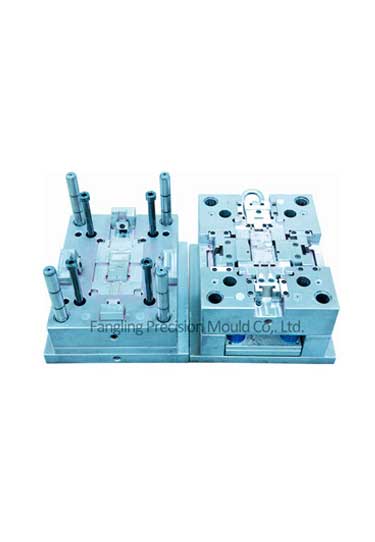
A: Yes. 3D printing is often used to fabricate master patterns, inserts, or complex cores for molds, which can be used for vacuum casting or as sacrificial parts. This approach speeds up tooling development and allows testing of mold designs without full metal fabrication.
A: By creating detailed CAD models for 3D printing, engineers can simulate flow, cooling, and draft angles in injection molding software. This digital iteration helps optimize wall thickness, gate placement, and shrinkage compensation before cutting steel, saving time and reducing scrap rates.
A: Absolutely. Small manufacturers can use 3D printed molds or inserts to produce low-volume production parts without the high upfront cost of traditional mold steel. This allows testing market demand or function before investing in full-scale tooling.
A: 3D printing allows designers to experiment with complex internal channels, conformal cooling, and lattice structures that would be difficult to machine traditionally. Integrating these features into injection molds can improve cooling efficiency, reduce warpage, and enhance part performance.